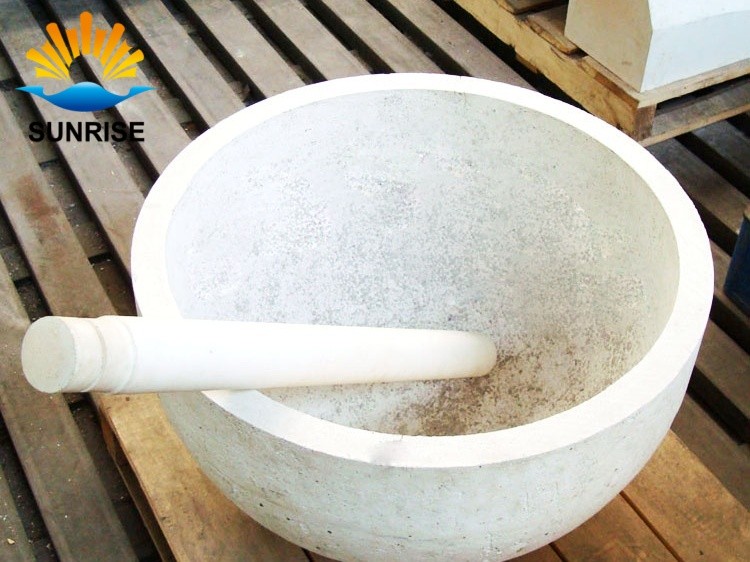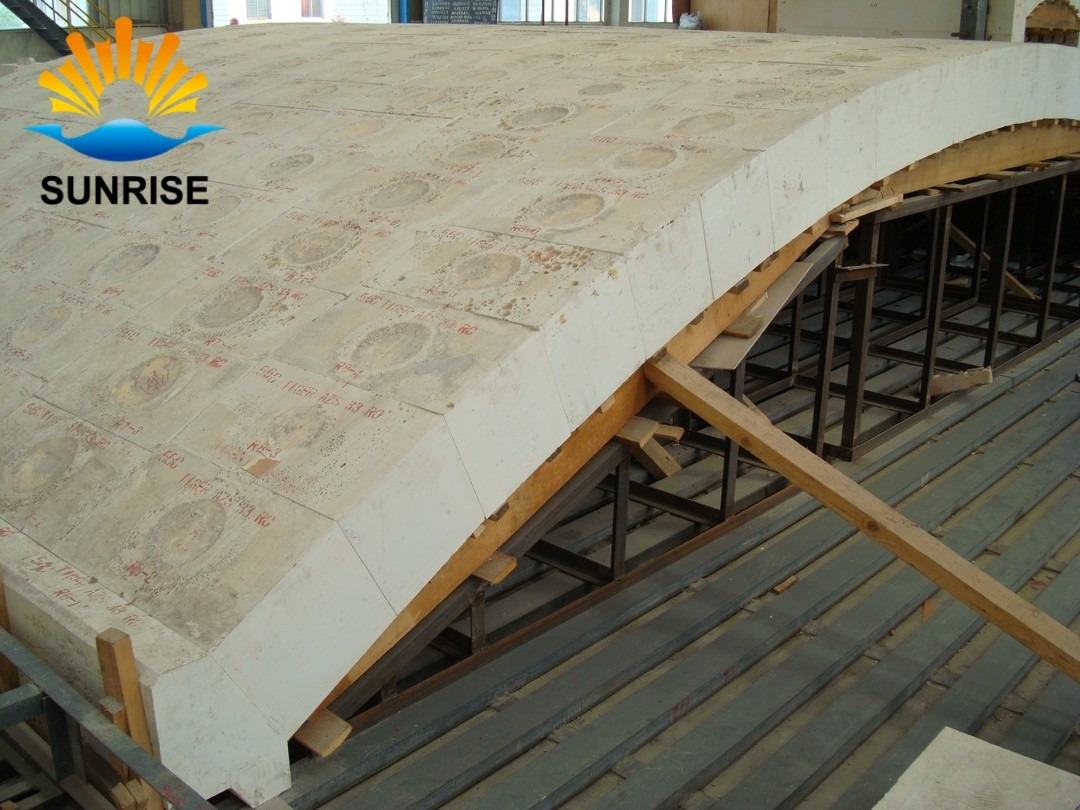

Fused Cast AZS Block

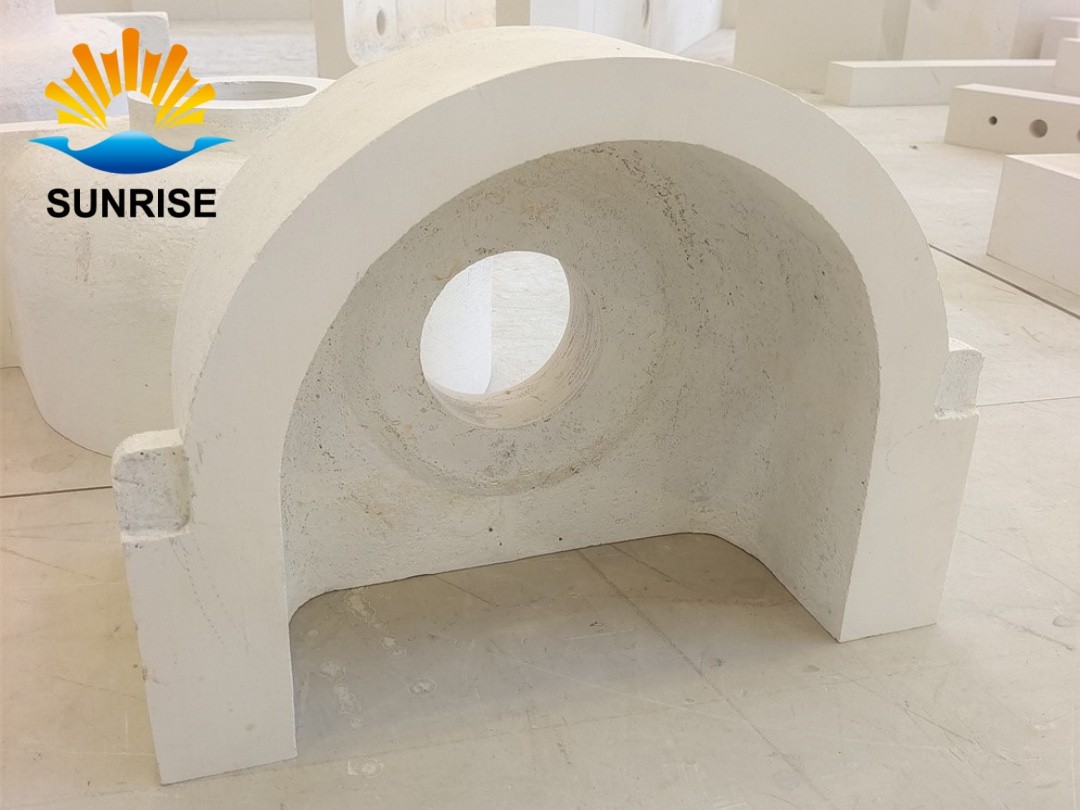
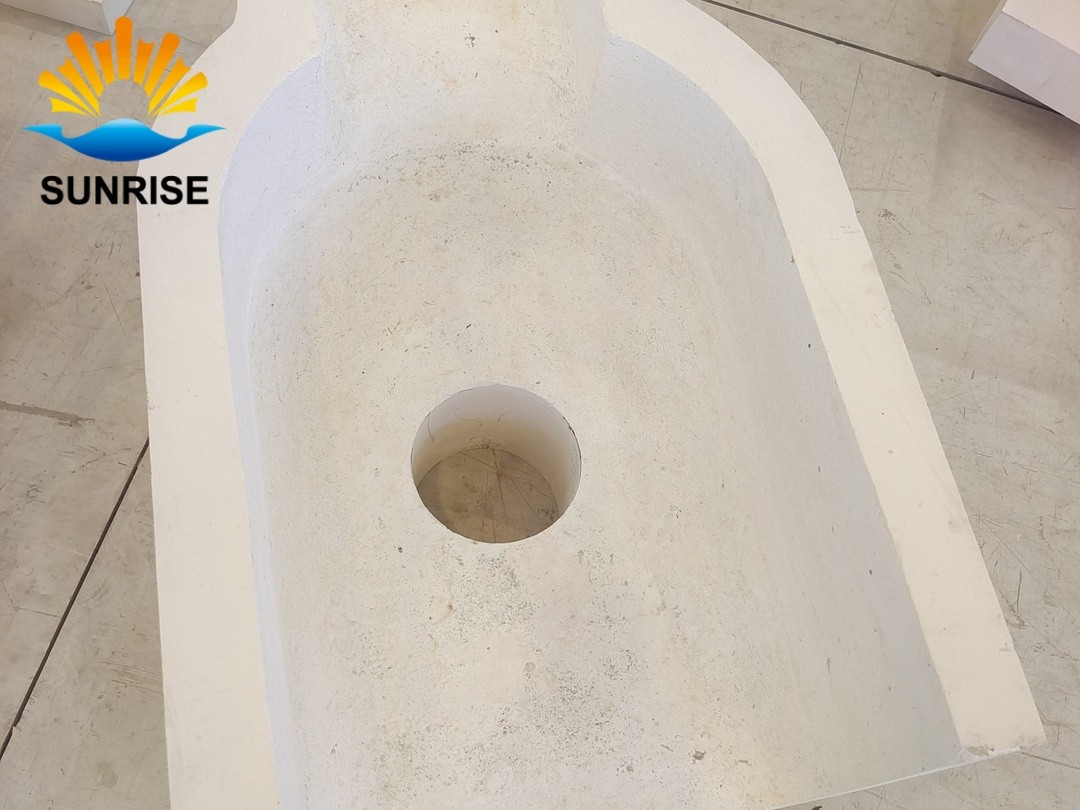
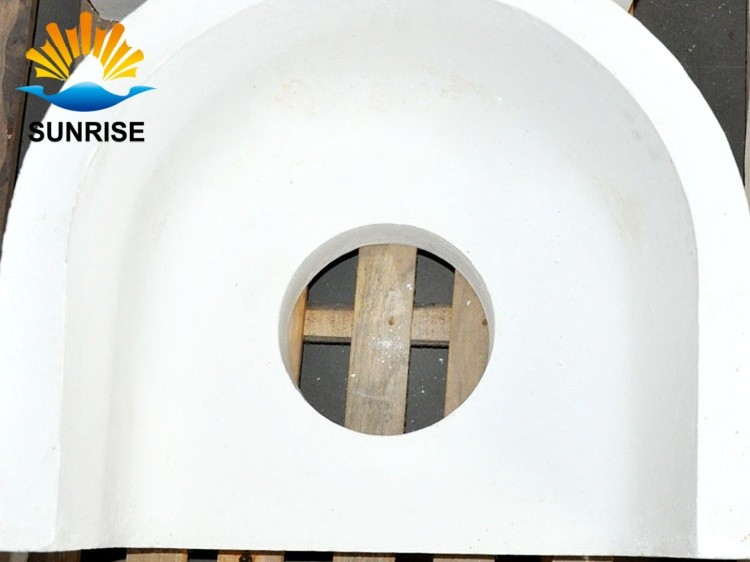
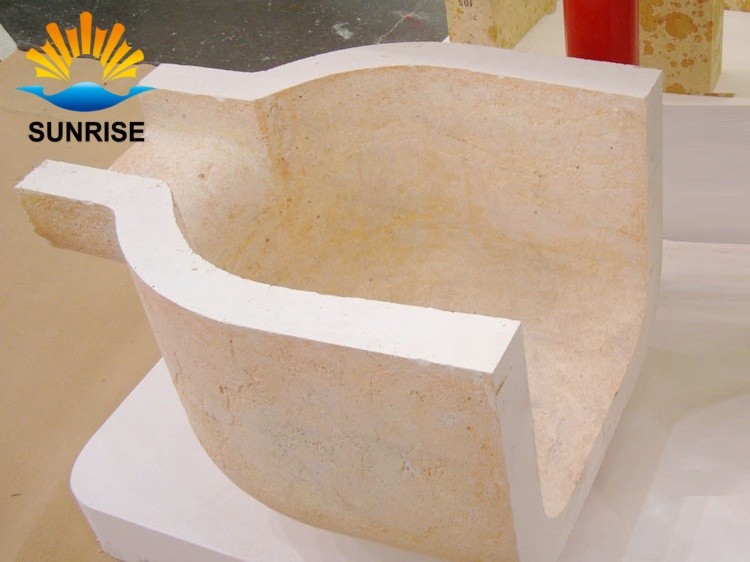
AZS Spout Blocks
Al2O3:50%
ZrO2 :32.5%
SiO2 :15.5%
Na2O:1.4%
Cold Crushing Strength: 300MPa
Exudation Temperature of Glass Phase: 1400 ℃
Static Corrosion Rate to Glass Liquid (Soda lime glass 1500℃×36h) :1.45mm/24h
PRODUCT DESCRIPTION
Fused Cast AZS Spout Block
Description
Fused cast AZS spout block, also widely known as a feeder bowl or spout block, is the crowning, high-precision component located at the very end of the glass furnace forehearth system. Positioned directly above the orifice ring, the spout bowl acts as the final containment chamber where molten glass is conditioned, mechanically stirred, and vertically discharged into individual glass gobs.
Because it is subjected to the most intense thermal cycling, relentless mechanical scouring, and continuous structural stress from revolving tubes and plungers, our AZS Spout Bowls are engineered to the highest industrial standards. Manufactured via electric arc melting of high-purity alumina (Al₂O₃), zirconia (ZrO₂), and silica (SiO₂) at temperatures above 2,000°C, these bowls undergo void-free casting and advanced diamond-machining to deliver unmatched operational reliability.
Advantages
l Ultimate Erosion & Scouring Resistance
As the final funneling point, the spout bowl experiences high-velocity glass flow and severe turbulent friction. The dense, interlocking Baddeleyite-Corundum crystalline matrix provides exceptional resistance against this aggressive mechanical and chemical wear.
l Flawless Glass Quality & Defect Prevention
Featuring a completely optimized microstructure and virtually zero apparent porosity, our AZS spout bowls suppress the exudation of glassy phases. This eliminates the risk of stones, cords, cat-scratches, or blistering at the most critical stage—right before the glass is formed.
l Extreme Thermal Shock Stability
Spout bowls are vulnerable to thermal shock during color changes, job changes, or initial furnace heat-ups. Our specialized annealing process imparts structural elasticity to the blocks, allowing them to withstand rapid thermal fluctuations without micro-cracking.
l Precise Dimensional Integrity
Advanced diamond-grinding equipment finishes each bowl to micrometric tolerances. This ensures a flawless, tight seal with the orifice ring and feeder housing, completely preventing glass leakage or upward drilling erosion.
l Extended Service Life
Designed to withstand long-term operational stress without losing its geometric shape, our AZS spout bowls drastically reduce unscheduled feeder shutdowns, lowering your total cost of ownership.
Applications
l High-Speed Container Glass Forming: Essential for IS (Individual Section) machines manufacturing beer bottles, wine bottles, spirit containers, and food jars where consistent gob weight is critical.
l Premium Tableware & Glassware Production: Used in manufacturing high-end soda-lime or crystal cups, bowls, and plates where optical clarity and zero cosmetic flaws are mandatory.
l Pharmaceutical & Technical Glass: Ideal for lines producing neutral glass tubing, ampoules, and vials that require a strictly inert environment to prevent chemical contamination.
l Specialty & Lighting Glass: Deployed in advanced forming systems for automotive lighting, laboratory glassware, and optical components.
Available Specifications & Casting Technology
To ensure absolute structural integrity, we strictly recommend and provide specific casting methods for spout bowls based on your production requirements:
Casting Methods:
WS (Void-Free): The entire bowl is completely solid with zero internal shrinkage cavities. Highly recommended for all glass-contact areas of the spout bowl to maximize lifespan and prevent localized premature wear.
ZWS (Specially Treated Void-Free): Optimized casting for complex bowl geometries, ensuring uniform density from the outer flanges to the inner throat.
Material Grade Selection:
AZS-33 / AZS-36: Excellent all-around performance for standard container glass and tableware furnaces.
AZS-41: Formulated with over 40% Zirconia, offering the ultimate defense for highly aggressive glass melts (such as borosilicate or opal glass) and ultra-high pull-rate feeders.
TECHNIQUE DATA
| Item | SR‑AZS33 | SR‑AZS36 | SR‑AZS41 | |
| Chemical Composition % | Al₂O₃ | ≥50.00 | ≥48.30 | ≥45.60 |
| ZrO₂ | ≥32.50 | ≥33.50 | ≥40.00 | |
| SiO₂ | ≤15.50 | ≤14.00 | ≤12.50 | |
| Na₂O | ≤1.40 | ≤1.40 | ≤1.25 | |
| True density g/cm³ | ≥3.84 | ≥3.93 | ≥4.10 | |
| Apparent Porosity % | ≤1.2 | ≤1.0 | ≤1.0 | |
| Cold Crushing Strength Mpa | ≥300 | ≥350 | ≥350 | |
| Exudation Temperature of Glass Phase ℃ | ≥1400 | ≥1400 | ≥1400 | |
| Bubble Separation Ratio(1300℃×10h) | ≤1.2 | ≤1.0 | ≤1.0 | |
| Static Corrosion Rate to Glass Liquid (Soda lime glass 1500℃×36h) mm/24h | ≤1.45 | ≤1.30 | ≤1.20 | |
| Bulk Density (g/) | ZWS (RR EVF EC ENC) | ≥3.65 | ≥3.70 | ≥3.90 |
| WS ( RT VF EPIC FVP DCL) | ≥3.75 | ≥3.80 | ≥3.95 | |
Online Message
* Note: Please be sure to fill in the information accurately and keep the communication open. We will contact you as soon as possible