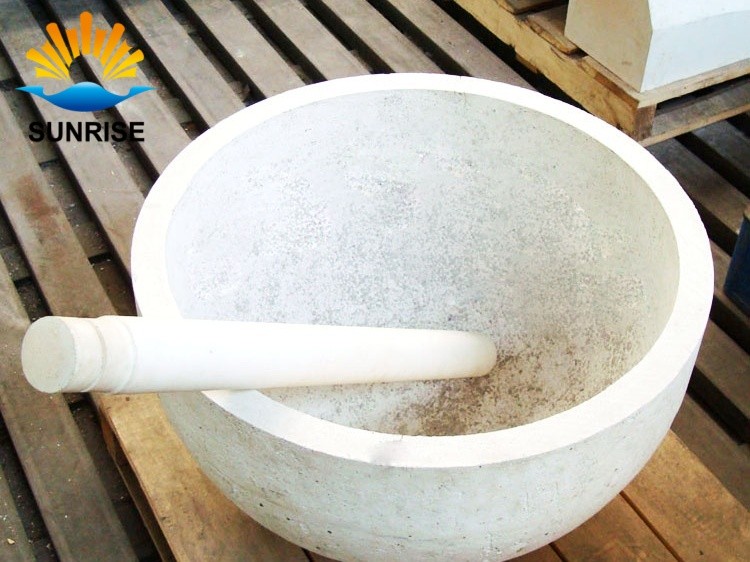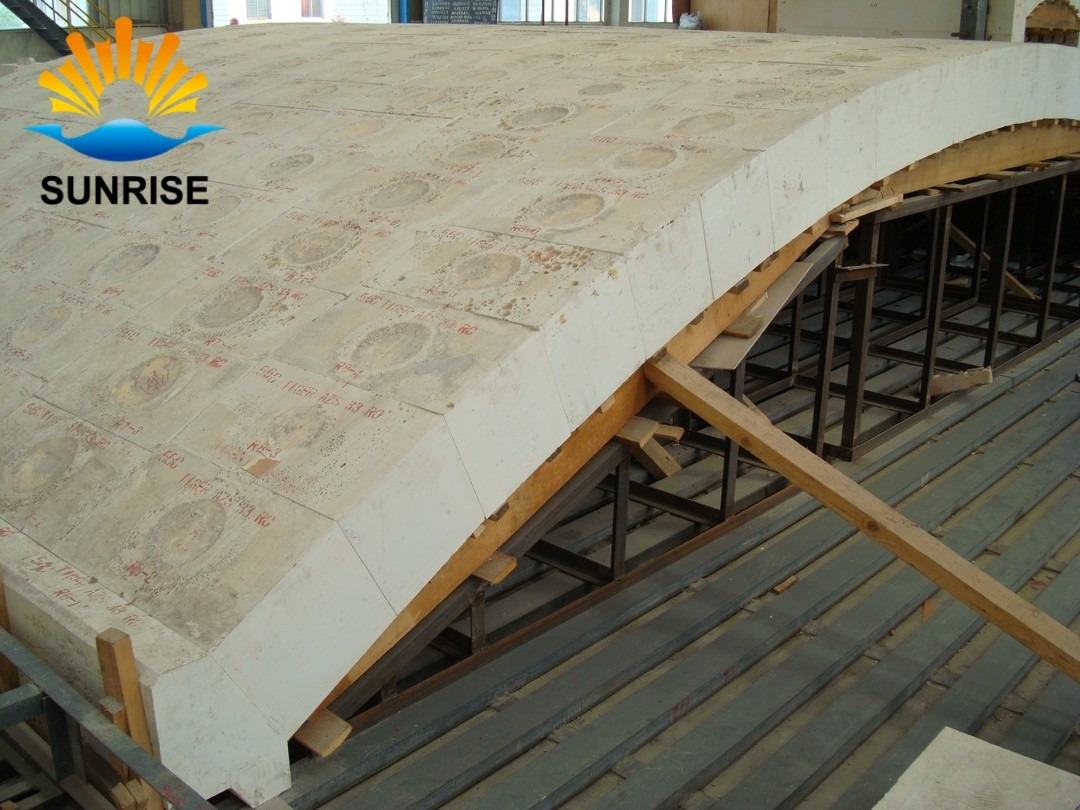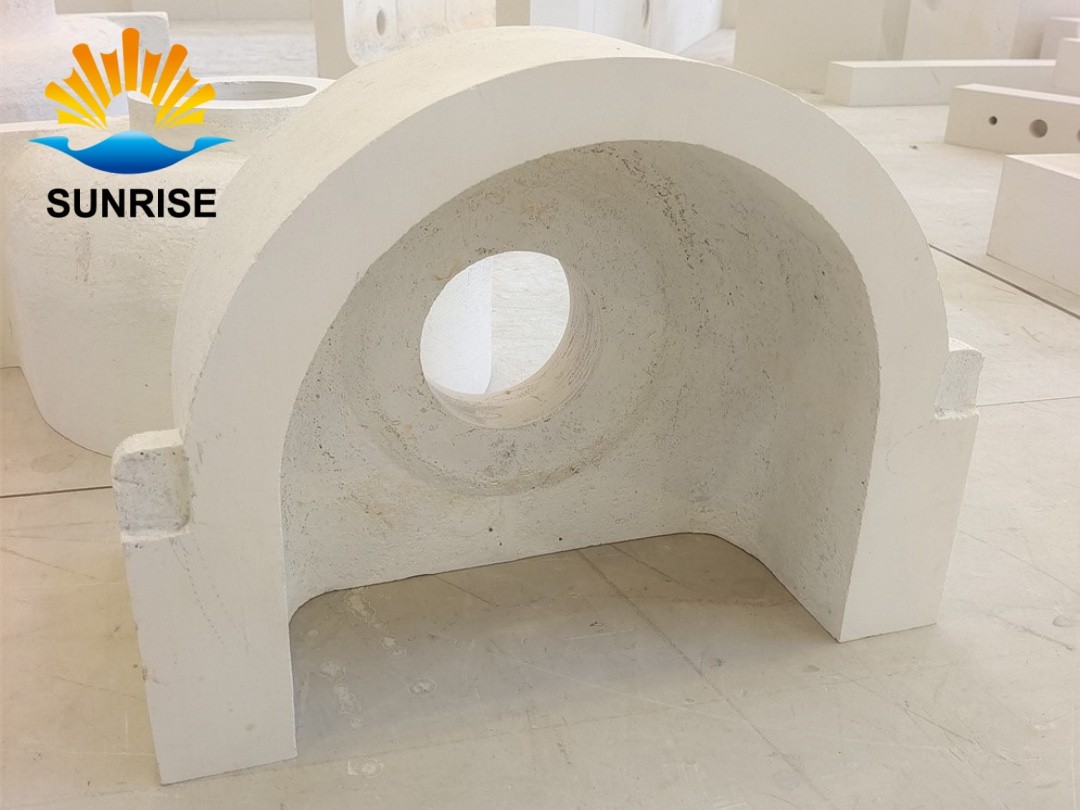

Fused Cast AZS Block

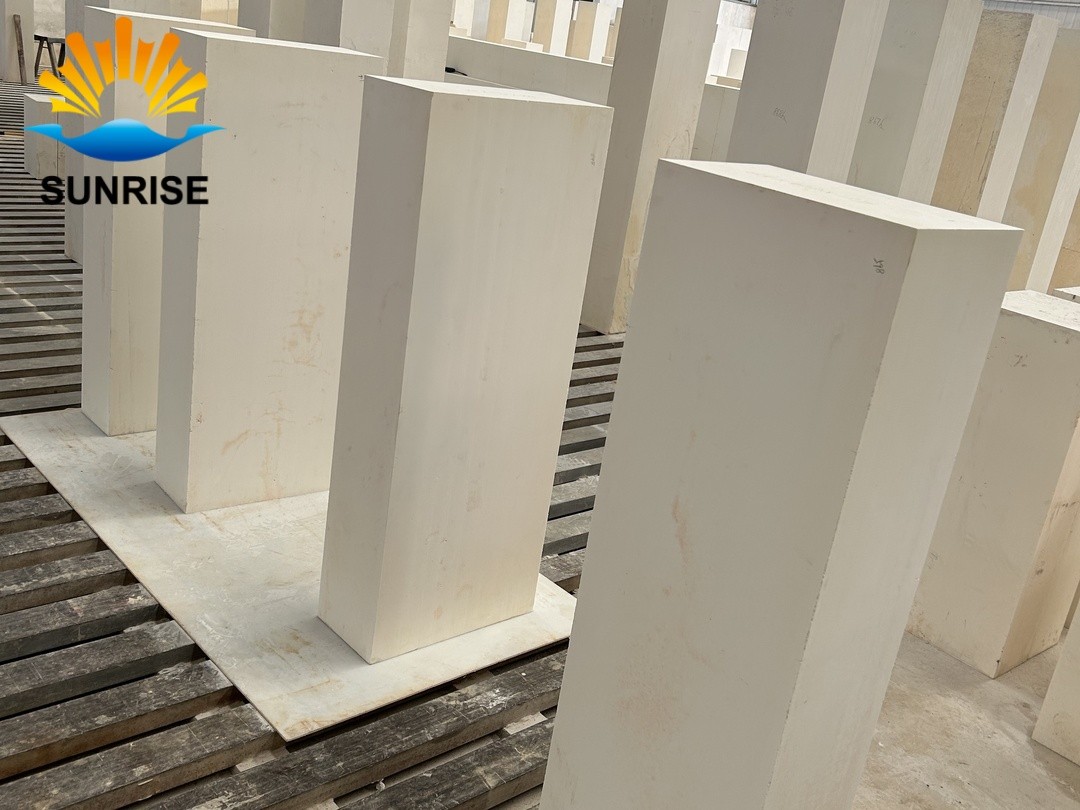
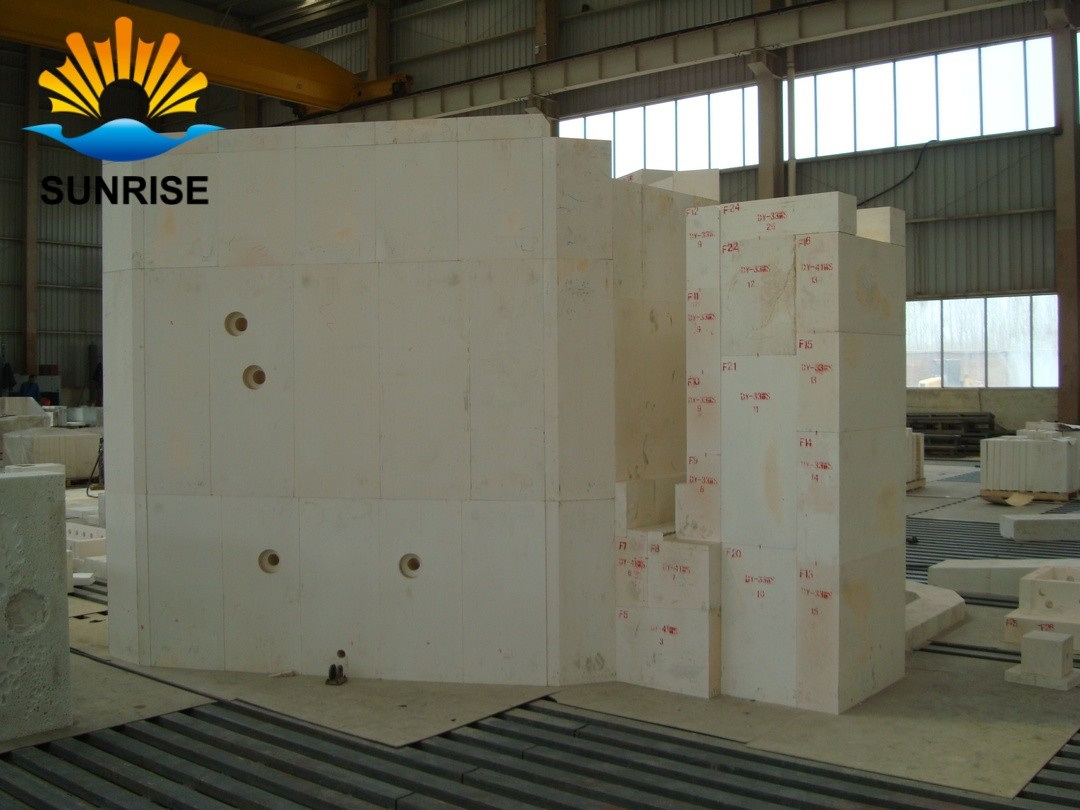
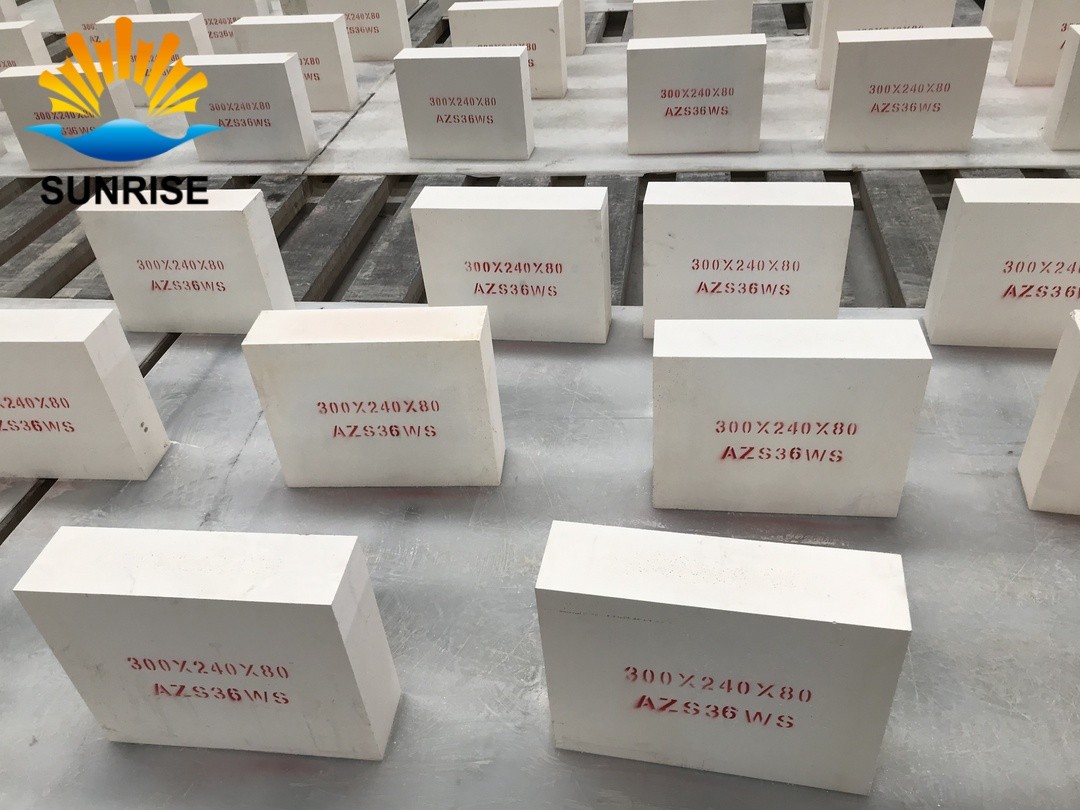
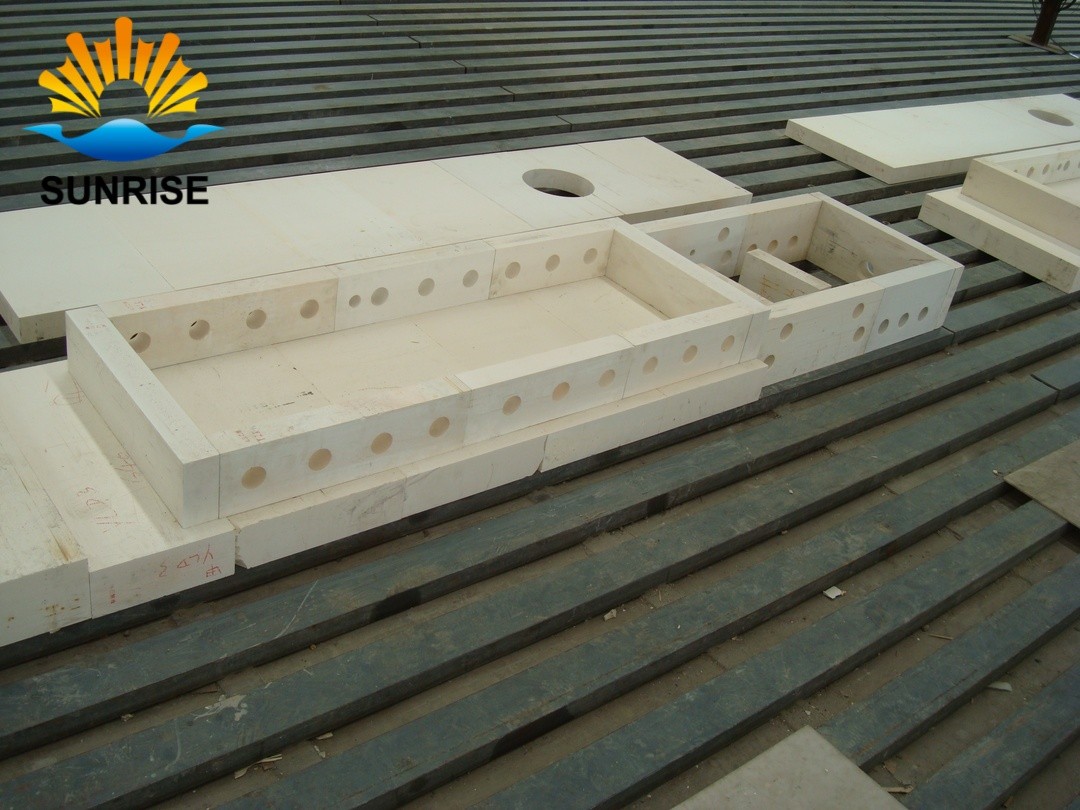
Fused Cast AZS SR-AZS36
Al2O3: 48.3%
ZrO2: 35.5%
SiO2 : 14%
Na2O: 1.4%
Cold Crushing Strength: 350MPa
Exudation Temperature of Glass Phase: 1400 ℃
Static Corrosion Rate to Glass Liquid (Soda lime glass 1500℃×36h): 1.3mm/24h
PRODUCT DESCRIPTION
►Fused Cast AZS SR-AZS36
Description
Fused cast AZS SR-36 block upgrade the Zirconia (ZrO₂) content to approximately 36%, it significantly improves resistance to chemical corrosion and physical wear from molten glass, while maintaining excellent thermal shock resistance. This product is only available for straight shapes.
The microstructure of the AZS 36 block is optimized to achieve an excellent structural balance among corundum crystals, baddeleyite crystals, and the glassy phase matrix. Due to the increased Zirconia content, a denser pattern of interlocking baddeleyite-corundum eutectic crystals forms within the microstructure. This eutectic structure acts as a tightly knit defensive shield, greatly delaying the penetration of molten glass into the block matrix. Compared to the 33 block, the glassy phase in the 36 block is strictly controlled. It features a lower overall percentage and a higher glass phase exudation temperature, which effectively prevents joint leakage or accelerated erosion caused by matrix softening at ultra-high temperatures.
Casting Methods
Fused cast AZS blocks are classified and selected not just by their chemical composition, but primarily by their casting methods. During the cooling process, liquid AZS contracts significantly, leaving a huge shrinkage cavity inside the block.
To manage this cavity, we use four distinct casting methods, each offering specific operational advantages.
Normal Casting (PT)
The liquid batch is poured directly into the mold and cooled as-is. The shrinkage cavity forms naturally in the middle of the non-working face.
Advantages:
Lowest Cost: The most economical manufacturing process with zero material waste.
Excellent Thermal Shock Resistance: The internal void provides space for thermal expansion, reducing the risk of cracking during furnace heat-up.
Best Used For: Areas completely out of contact with liquid glass and under low erosion, such as the superstructure of the furnace or crown walls.
Tilt Casting (QX)
The mold is tilted during the casting and cooling process. This forces the shrinkage cavity to shift away from the center and into one specific rear bottom side of the block. One complete dense zone forms at the opposite end.
Advantages:
Cost-Effective Defense: Cheaper than completely void-free blocks, but offers a perfectly dense working face.
Targeted Longevity: By installing the dense side facing the molten glass and the cavity side facing outward, it delivers excellent erosion resistance.
Best Used For: Furnace sidewall or upper sidewalls where only one face encounters aggressive chemical attacks.
End Casting (ZWS)
An extra riser is attached to the top of the mold. The shrinkage cavity forms entirely within this riser. Once cooled, this top portion is sawed off, leaving shallow shrinkage cavity at the very edge where it was cut.
Advantages:
High Structural Density: Over 90% of the block is completely solid, offering massive resistance to physical and chemical wear.
Extended Furnace Life: Prevent the block from breaking too early when melted glass erodes through to an shrinkage cavity inside.
Best Used For: Glass-contact sidewalls, and areas experiencing heavy liquid currents.
Void-Free Casting (WS)
Similar to End casting, but uses a much larger riser. The top riser is cut off completely, leaving no shrinkage cavity in bricks.
Advantages:
Maximum Corrosion Resistance: No voids or loose crystal structures for molten glass to penetrate.
Zero Joint Leakage: Can be machined and diamond-ground to extreme tolerances for tight, leak-free joints.
Best Used For: The most critical and aggressive zones of the furnace, including the throat, doghouse corners, dam blocks, and bubbler blocks.
Advantages
1. Low Exudation: Minimizes glass phase exudation at high temperatures.
2. Low Blistering Potential: Reduces the formation of bubbles in contact with molten glass.
3. High Density and Mechanical Strength: Its bulk density is typically higher than that of the 33 block, granting the material superior mechanical strength, abrasion resistance, and high-temperature creep resistance.
4. Superior Corrosion Resistance: Withstands long-term chemical dissolution and physical erosion driven by hot glass currents and corrosive gases.
5. Optimal Performance-to-Cost Ratio: Its corrosion resistance is significantly superior to that of the 33 block, while its manufacturing cost is substantially lower than that of the highly complex 41 block. This makes it the premier choice for large-scale sidewall masonry.
6. Extended Furnace Lifespan: Delivers a longer service life compared to AZS 33, reducing maintenance downtime.
7. Contamination Prevention: High purity ensures minimal coloration and zero defects in high-quality glass products.
Application
1. Melting Tank Sidewalls
Must adopt Void-Free (WS) or End-Cast (ZWS) methods to ensure maximum structural density. It successfully withstands intensive glass liquid corrosion and erosion at temperatures around 1500°C.
2. Channels & Feeder Systems
Applied in feeder channels, flow channels, distributors and throat blocks.
3. Superstructure Zones
Utilized in port neck walls, crown arches, and breast walls.
4. Special & Critical Areas
Extensively used in doghouses, throats, bottom paving, dam blocks, and electrode block corners.
TECHNIQUE DATA
Technical Data
| Item | SR-AZS36 | |
| Chemical Composition % | Al2O3 | ≥48.30 |
| ZrO2 | ≥35.50 | |
| SiO2 | ≤14.00 | |
| Na2O | ≤1.40 | |
| True density g/cm3 | ≥3.93 | |
| Apparent Porosity % | ≤1.0 | |
| Cold Crushing Strength Mpa | ≥350 | |
| Exudation Temperature of Glass Phase ℃ | ≥1400 | |
| Bubble Separation Ratio(1300℃×10h) | ≤1.0 | |
| Static Corrosion Rate to Glass Liquid (Soda lime glass 1500℃×36h) mm/24h | ≤1.3 | |
| Bulk Density (g/cm3) | PT(RN RC N) | ≥3.50 |
| ZWS(RR EVF EC ENC) | ≥3.70 | |
| WS( RT VF EPIC FVP DCL) | ≥3.80 | |
Online Message
* Note: Please be sure to fill in the information accurately and keep the communication open. We will contact you as soon as possible