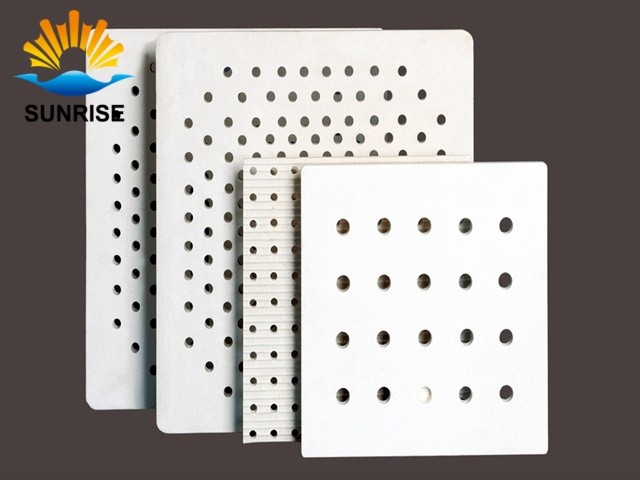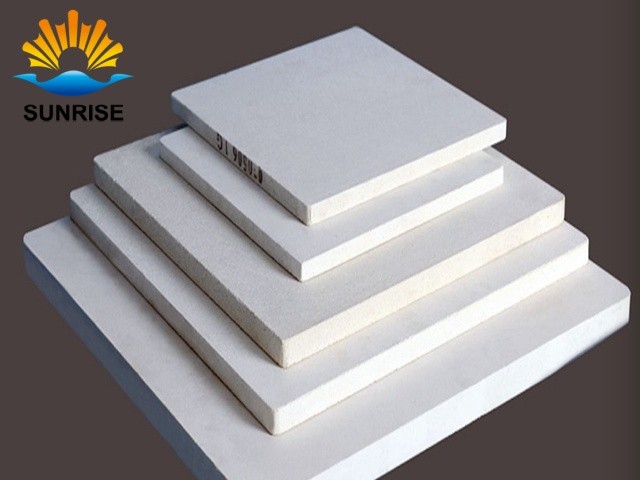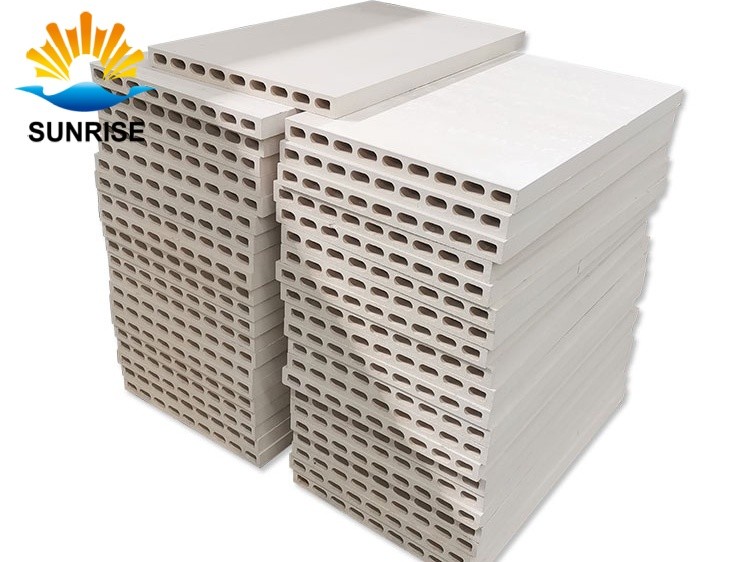

Cordierite Batts Furniture

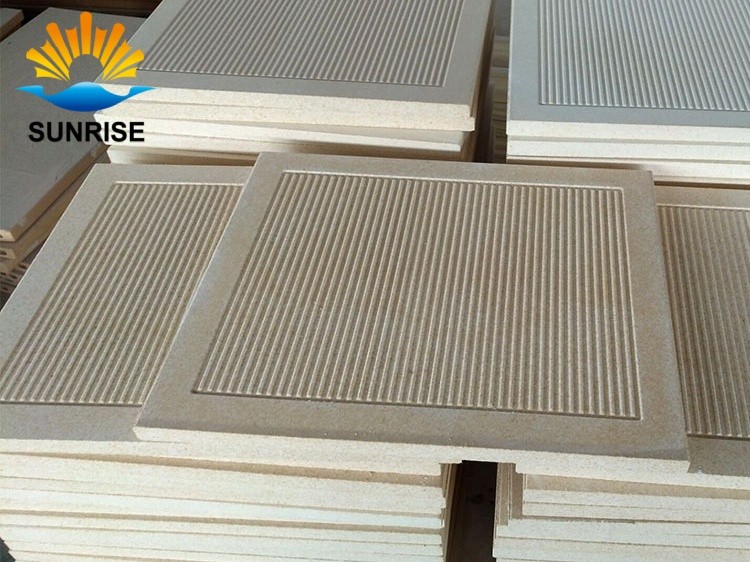
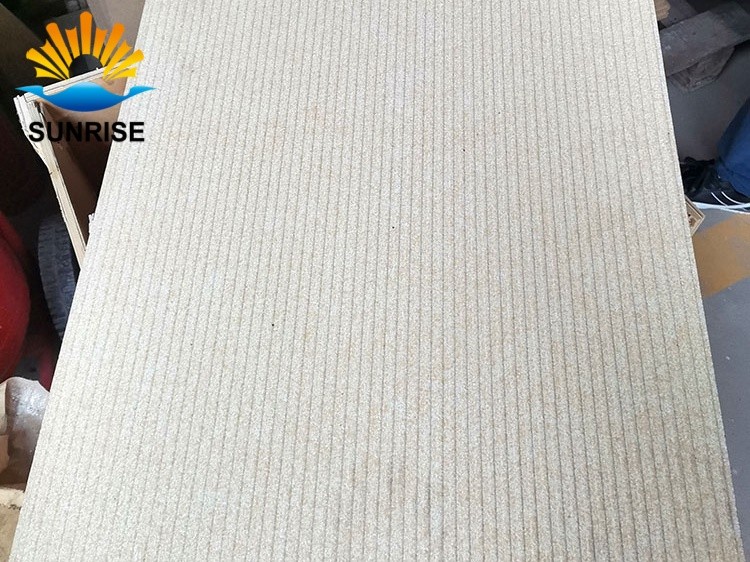
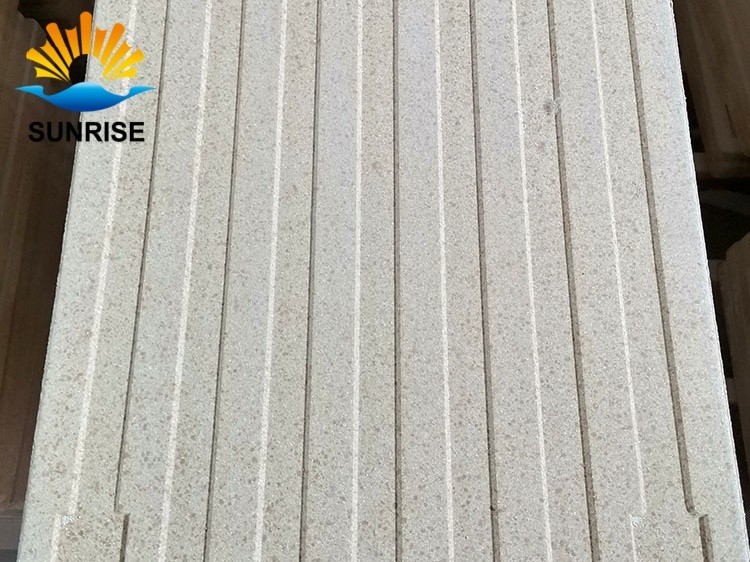
Grooved Batts
Al2O3: 40~46%
SiO2: 44~52%
Bulk density: 1.82~2.0g/cm3
Apparent porosity: 25~29%
Max working temperature: 1320℃
PRODUCT DESCRIPTION
Cordierite-Mullite kiln furniture is composed of Cordierite-Mullite and a glass phase. Due to the high-temperature resistance of mullite and the low expansion of cordierite, Cordierite-Mullite kiln furniture has the good property of excellent thermal shock resistance. Cordierite-Mullite kiln furniture has the ability to work safely in long cycles at temperatures below 1350℃, so it can fulfill the production demands of most ceramics.
Mullite is a silicate of alumina having the theoretical formula 3Al2O3.2SIO2, with a theoretical composition of 71.8%Al2O3 and 28.2% SiO2, deriving its name from the island of Mull in Scotland, where the only naturally occurring deposits are to be found; in practice, mullite is synthetically formed by either entering or electrofusion. The typical properties are: theoretical density 3.20g/cm3, melting point 1870℃, C.T.E at 20-1000℃ 5.3×10⁻⁶. Mullite is an excellent refractory raw material with moderate thermal expansion.
Cordierite is commonly denoted as 2MgO-2Al2O3-5SiO2 with a theoretical composition of 13.7% MgO, 34.9%Al2O3, 51.4%SiO2. As with mullite, cordierite rarely occurs naturally; industrial cordierite is formed by either sintering or electrofusion. The typical properties of the material are: theoretical density 2.57-2.60g/cm3, melting point 1460℃, C.T.E at 20-1000℃ 1.5×10⁻⁶. The characteristic of lower and more uniform thermal expansion makes it the ideal raw material for kiln furniture.
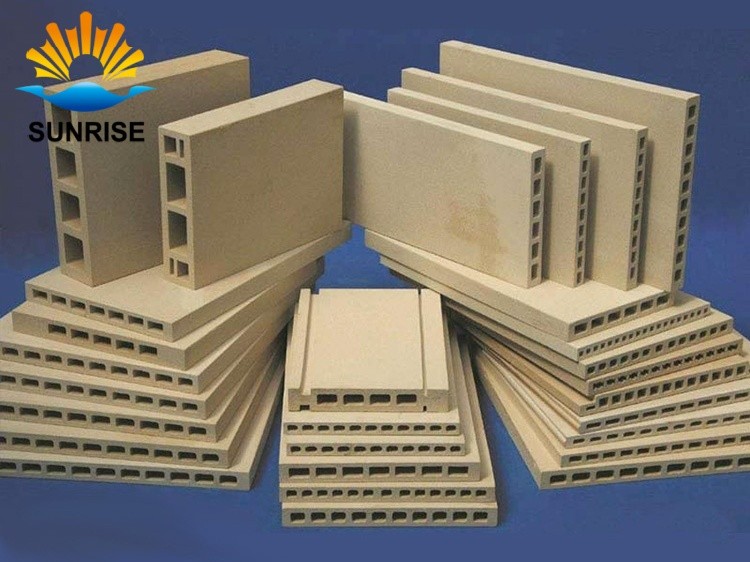
Ceramic batts are refractory tiles or slabs which are typically used as part of the kiln car superstructure and which also may support ware during the kiln firing cycle.
We have a wide range of batts available including:
Plain
Perforated Multi-hole
Extruded / hollow
Pressed
Ribbed/grooved
Featured batts, including recesses for location and mug placement
Features:
1. High corrosion resistance.
2. High mechanical strength.
3. Lower possibility of crack by thermal shock.
4. Longer service life.
Application
Ceramic industry: Used in the firing process of daily-use ceramics, sanitary ceramics, building ceramics and industrial ceramics, as kiln tools and kiln body structural materials, ensuring stability and fire resistance at high temperatures.
Electronic Ceramics: Used in the firing of electronic ceramics, especially products such as ferrites and resistors; the kiln tools are required to have good chemical inertness and thermal shock stability.
Lithium Battery Materials: Used in the firing of lithium battery positive electrode materials, cordierite mullite board provides the necessary strength and alkali corrosion resistance in this process to improve product quality.
Combustion Board: As the material of the combustion board, combining the characteristics of cordierite and mullite, it improves mechanical strength and thermal stability and prolongs service life.
Electronic Equipment: Applied in electric heating equipment, such as hot air guns and hair dryers, as insulation materials and the skeleton of heating elements.
Solar Thermal Power Generation: In solar thermal power generation systems, it is used as a high-temperature pipeline material, requiring good high-temperature stability and thermal shock resistance.
Building Materials: Due to its excellent fire resistance, it can also be used as refractory bricks or other structural materials in buildings to improve the safety and durability of buildings. These uses demonstrate the importance of cordierite mullite board in modern industry, especially in applications requiring high temperature and chemical stability.
TECHNIQUE DATA
| Material | Cordierite-Mullite | ||||||||
| Chemical Composition | Al2O3 | 40 | 41 | 36 | 39 | 41 | 43 | 46 | |
| SiO2 | 49 | 48 | 52 | 49 | 47 | 46 | 44 | ||
| MgO | 6.5 | 7.0 | 7.0 | 8.0 | 7.0 | 7.0 | 6.0 | ||
| Bulk density g/cm3 | 1.95 | 1.90 | 1.85 | 1.82 | 1.95 | 1.82 | 2.00 | ||
| Apparent porosity % | 26 | 28 | 28 | 29 | 26 | 33 | 25 | ||
| MPa | 20℃ | 14 | 13 | 16 | 10 | 13 | 15 | 18 | |
| 1250℃ | 14 | 13 | 10 | 11 | 15 | 15 | 17 | ||
| C.T.E. 20-1000℃ | 2.3 | 2.3 | 2.6 | 2.2 | 2.2 | 2.5 | 3.1 | ||
| Specific heat 20℃ | 10 | 1.0 | 1.0 | 1.0 | 1.0 | 1.0 | 1.1 | ||
| Max working temperature ℃ | 1300 | 1250 | 1300 | 1320 | 1280 | 1280 | 1350 | ||
Online Message
* Note: Please be sure to fill in the information accurately and keep the communication open. We will contact you as soon as possible