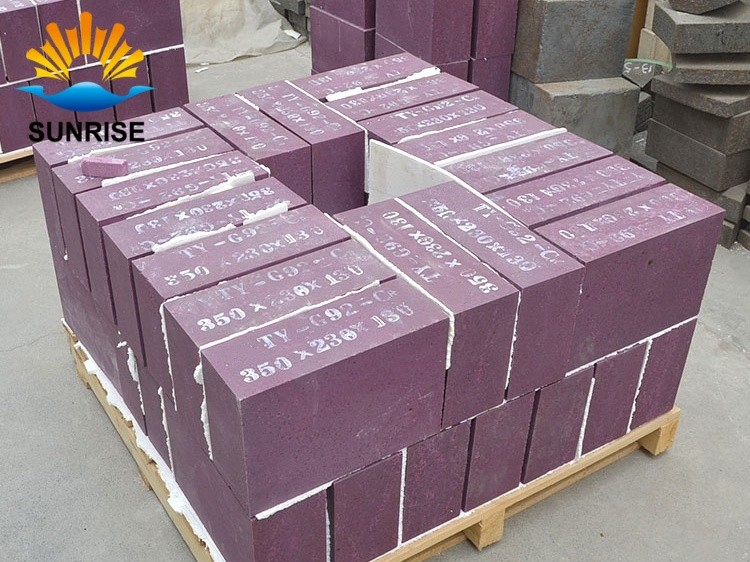

Corundum Brick

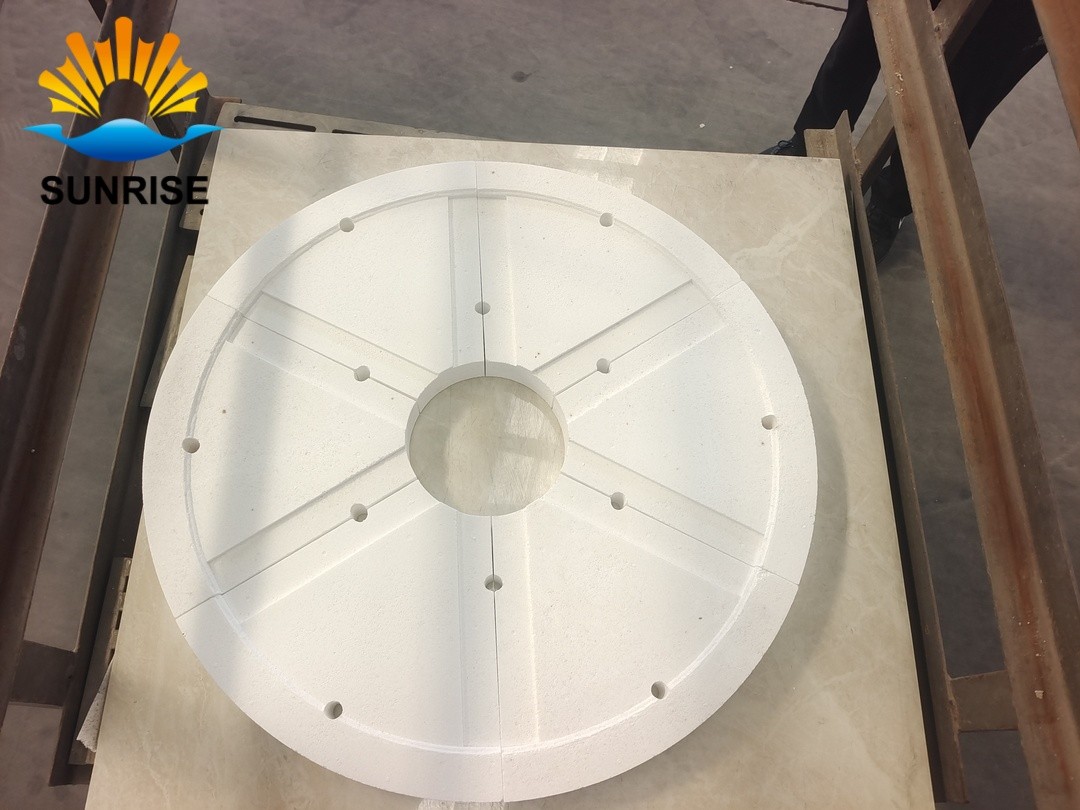
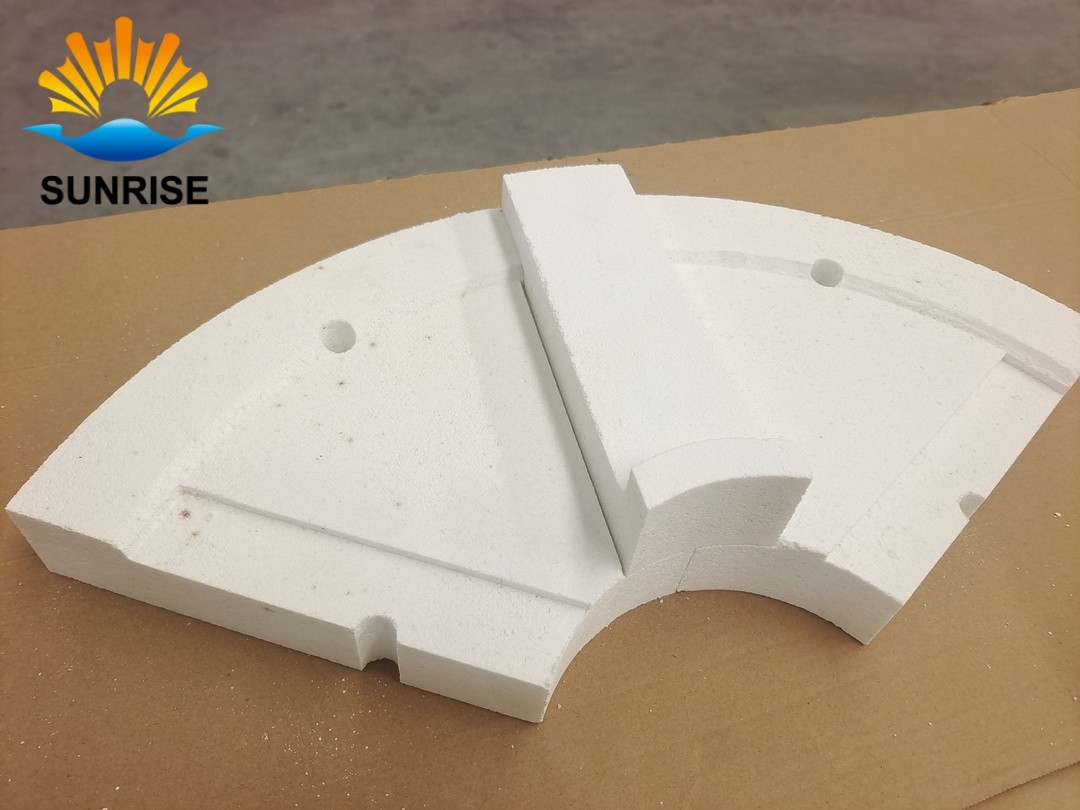
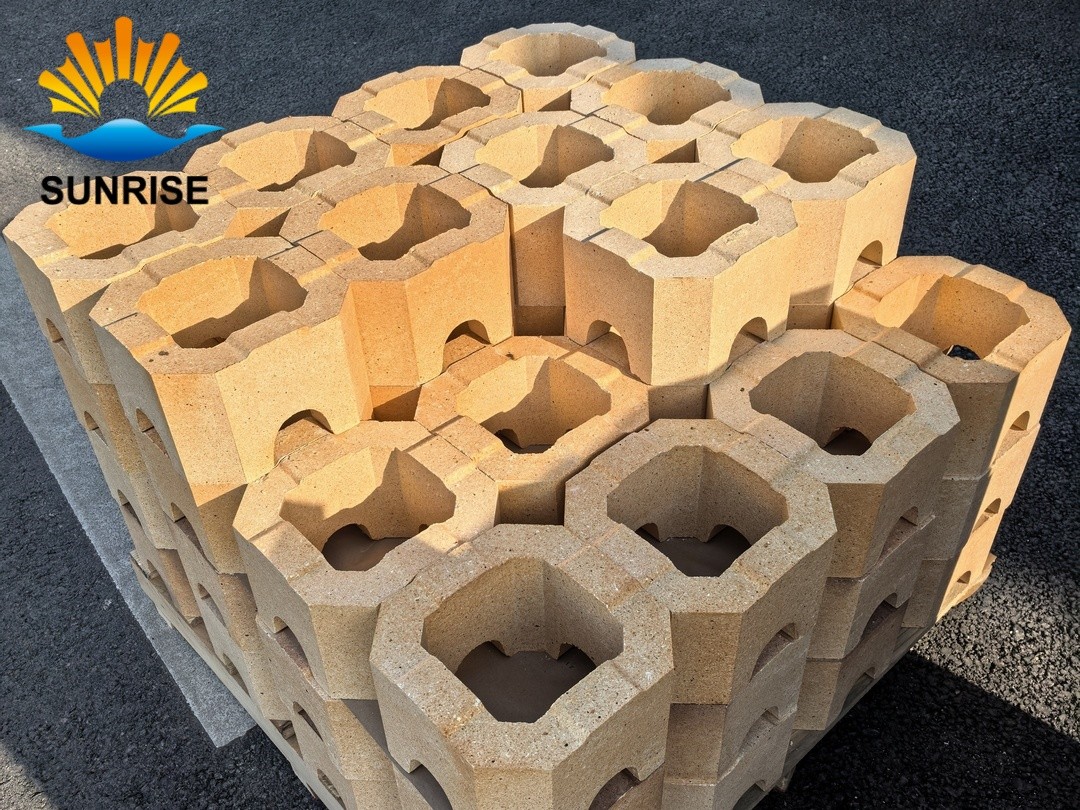
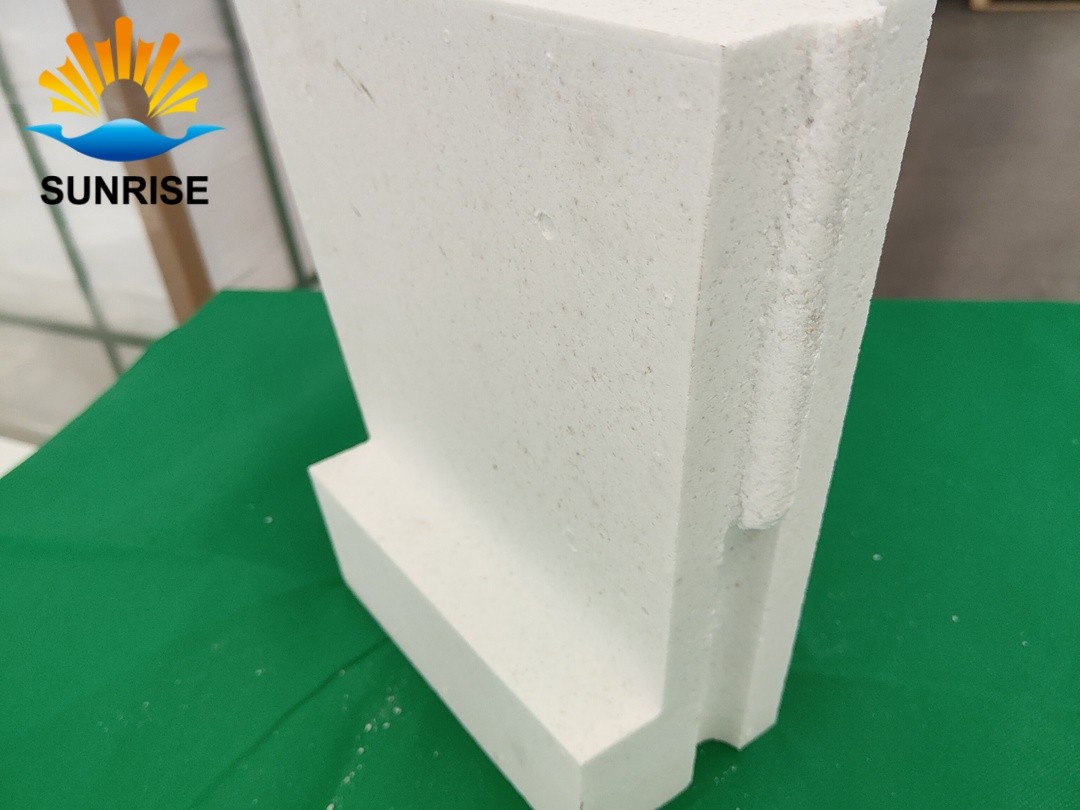
Corundum brick
Apparent Porosity (%) ≤17
Bulk Density (g/cm3) ≥3.20
Cold Crushing Strength (Mpa) ≥100
0.2Mpa Refractoriness Under Load T0.6 ℃ ≥1850
PRODUCT DESCRIPTION
Introduction:
Corundum bricks refer to refractory products with alumina content greater than 90% and corundum as the main crystal phase. The product has very high cold crushing strength, high wear resistance, high refractoriness under load (greater than 1700°C), and good chemical stability. It has strong corrosion resistance to acidic or alkaline slag, metal, and molten glass. There are two types of sintered corundum bricks and fused corundum bricks. Sintered alumina and fused corundum can be used as raw materials, or bauxite clinker with a high Al2O3/SiO2 ratio can be combined with sintered alumina and made by the sintering method.
Features:
Main mineral component of corundum brick is corundum phase, it has excellent physical property in high temperature, resistance to chemical corrosion. It is widely used in lining of ovens of petrochemical industry; bottom of steel rolling mill and in the second-stage converters of the 300000t ammonia synthesis furnaces, steel notch.
Applications:
Corundum bricks are mainly used in the iron and steel industry, glass industry and petrochemical industry, etc. In the iron and steel industry, it’s mainly used in ironmaking blast furnaces and hot blast furnaces, hot metal ladle and torpedo cars, refining furnaces, and sliding water heaters. It’s used as covers of glass melting furnace superstructure, burner bricks, forehearth, peep hole bricks, and forehearths in medium alkali borosilicate glass furnaces.
TECHNIQUE DATA
| Item | Behaviors | ||
| TY-G93 | TY-G98 | ||
| ChemicalComposition % | Al2O3 | ≥93 | ≥98 |
| SiO2 | ≤5.0 | ≤0.2 | |
| Fe2O3 | ≤0.1 | ≤0.1 | |
| CaO | ≤1.2 | ≤1.2 | |
| Apparent Porosity (%) | ≤17 | ≤17 | |
| Bulk Density g/cm3 | ≥3.15 | ≥3.2 | |
| Cold Crushing Strength Mpa | ≥100 | ≥100 | |
| Modulus of Rupture at High Temperature 1250℃ Mpa | ≥9.5 | ≥9.5 | |
| Refractoriness ℃ | ≥1900 | ≥1850 | |
| 0.2Mpa Refractoriness Under Load T0.6 ℃ | ≥1700 | ≥1680 | |
| Permanent Linear Change on Reheating 1500℃×2h % | ≤±0.2 | ≤±0.2 | |
Online Message
* Note: Please be sure to fill in the information accurately and keep the communication open. We will contact you as soon as possible